




Ensuring your timber endures for many years to come
Ensuring your timber endures for many years to come
Timber must be treated with the appropriate preservative chemical
to avoid the natural decay process.
Timber is the most sustainable of all materials available for construction whether you’re building a home, farm fence, bridge or shopping mall.
Timber from pine and eucalyptus trees – the species most commonly used for construction purposes – is not durable, making it subject to damage from water, fungus, insect larvae and the pesky termite. To prevent this natural process of decay, timber must be treated with the appropriate preservative chemical.
There is a dangerous misconception that timber simply needs to be sealed with a protective coating. Sealants merely protect against weathering and do not penetrate the timber, leaving it vulnerable to attack from insects and fungus. Make sure the timber you use has been treated by a reputable company, in line with industry standards, using the chemical best suited for its hazard class (see more detail below).
Timber treatment should take place at a treatment plant where it undergoes a vacuum and pressure-cycle process in a treatment vessel and is treated with preservative chemicals at different strengths or loadings, depending on the intended purpose of the wood. This ensures that the wood will last for its intended use.
Consumers may ask for proof that their timber has been properly treated, as all wood sold as preservative-treated timber in South Africa must comply with the relevant national standards and be marked as such. In round poles, this information is displayed on a small metal disc attached to either end or with sawn timber, the information is applied with ink stamps. In either case, the information displayed should include the trademark of the manufacturer, the hazard class, a quality mark from the South African Bureau of Standards or auditing body SATAS, and the applicable national standards number.
It is helpful to understand the various timber ‘hazard classes’ and the wood preservative that best fits each class. The hazard classifications were established by The South African Wood Preservers Association, with the South African Bureau of Standards and representatives of the timber industry.
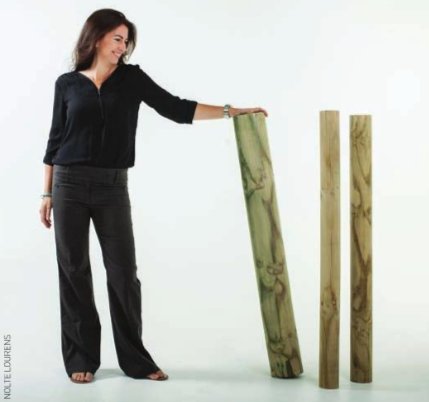
CCA (chromated copper arsenate) is the world’s most versatile wood preservative, with the best track record. It is suitable the highest hazard classes three to five and can be used for all hazard classes, although this is not always necessary. CCA-treated timber is light green and fades to grey in time. We’ve all seen this timber in children’s timber playgrounds, boardwalks and fencing.
Dolphin Bay is a leading supplier of wood preservatives to the timber market in southern Africa since the company was established in 1996. Dolphin Bay’s product Permacure CCA is sold to 13 countries across the world, meeting international standards and has gained an excellent reputation in the industry.
“Treated timber is used for a multitude of purposes in the construction industry,” says Dolphin Bay MD Bertus Coetzee. “Make sure your timber is correctly treated, and it will serve you for decades to come.”
Hazard classes
Hazard Class 1 (Interior) refers to timber for use inside – joinery, floorboards, ceilings and mouldings. This wood is protected only from certain commonly occurring insects in a mild treatment process. All the higher hazard classes offer protection against insect and fungal attack. In South Africa, all wood is treated according to Hazard Class 2 or higher category.
Hazard Class 2 (Low Hazard – Internal) refers to wood for interior use only such as structural timber, roof trusses, laminated beams, ceiling boards, flooring, panelling, skirtings and cupboards and give protection against insect and fungal attack. For these purposes, either Permacure CCA or Permabore Boron are appropriate.
Hazard Class 3 (Moderate Hazard – Exterior Above Ground) refers to wood used outside but above the ground, which is at risk of insects and fungal attack. This includes balustrades, some decking, beams, garden furniture, log home exteriors and cladding, gates and fascia boards. For this hazard class, use Permacure CCA.
Hazard Class 4 (High Hazard – Ground Contact) is timber in contact with the ground, which include playground structures, agricultural poles, other forms of fencing, pergolas, decking, bridges and stakes. This timber needs to be particularly resistant to rotting and termite attack. Permacure CCA is suitable for all these purposes.
Hazard Class 5 (High Hazard – Freshwater) applies to timber that is exposed to continual moisture or is planted in wet soil, which includes shade-netting poles, telephone poles, slipways, retaining walls, walkways, drains and jetties. Permacure CCA provides long-term protection for this hazard class.
Hazard Class 6 (High Hazard – Marine) uses CCA with creosote for this purpose to offer protection against marine borers such as jetties, slipways, retaining walls and walkways.
Source: Timber IQ
NOTE: Permission to use or reproduce this content must be approved by the publisher of Timber IQ.