




Mills cutting back on production to match slow demand in Central and West Africa
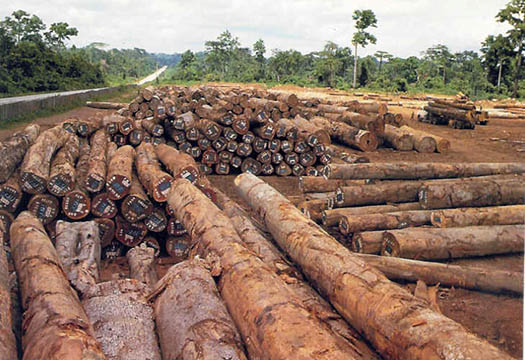
Okoume logs
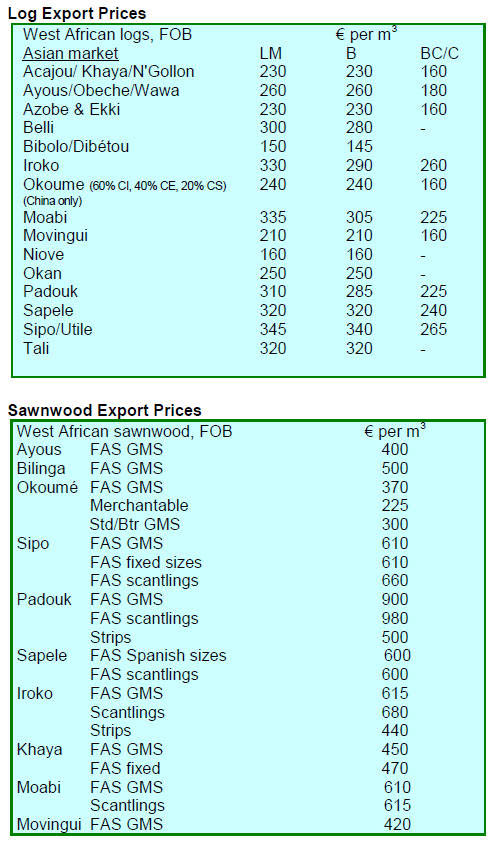
Log and sawnwood prices are unchanged from those reported at the end of May 2015 as demand western international markets is very slow. Sawmills in the region are reported to be either cutting back on production or temporarily ceasing operations in an effort to match output with current levels of demand.
Analysts remark that markets generally appear to have now entered a much quieter period and there are no signs of any substantial change in consumption of tropical hardwoods in Europe. Until the summer holiday period is over it is difficult to gauge how demand will develop in the second half of the year.
Importers in China are adjusting purchases in anticipation of a further weakening of demand as economic growth in the country slows. Log stocks in China are said to be still well above demand levels especially for Okoume and Okan.
Producers in West Africa do not expect any marked change in demand and during these quieter conditions are managing output levels to sustain current prices. At the same time while adjusting specifications to the recent ‘mixed grade’ that some buyers are beginning to accept.
Intense competition in Middle East markets
Only the Middle East markets remain buoyant where demand is firm but where prices are constantly under pressure because of intense competition from several sources including from N. American hardwoods. With so much destruction in the region it is an unfortunate fact that the Middle East will be a major timber market when reconstruction becomes possible.
Despite the good news on the Indian economy few West African suppliers have ventured into this market that offers good prospects.
For the coming months, West and Central African producers accept the need to carefully manage output in an attempt to provide the foundation for current price levels.
Advancing the VPA in Liberia
The EU FLEGT Facility has reported on a meeting of the Joint Implementation Committee of the Liberia-EU FLEGT Voluntary Partnership Agreement held to review implementation to-date, take stock of the effects of Ebola on activities and agree on the priorities for the 2015.
Among the issues discussed at the meeting were the key milestones in the development of the timber legality assurance system, further reinforcement of the legal framework and law enforcement as well as recent developments and challenges in the sector, including community forestry management agreements and transfer of timber revenues to communities.
Both Liberia and the EU were happy to acknowledge that the Ebola crisis has not derailed the VPA process, although it has generated significant delays.
A statement from the EU says, “The process to conclude the VPA is expected to last for several years but will promote legal forestry leading to more sustainable forest management, increased long-term revenues for communities and the government, investment and job creation.
Source: Global Wood (Edited)